Research for the Future

 Research is critical in advancing the practice of medicine. The Pacific Parkinson’s Research Centre operates in conjuncture with the UBC Movement Disorders Clinic. Our world class scientists and clinician-researchers collaborate continuously and through basic and clinical research, medical innovations are constantly being developed to help transform the lives of those that they affect.
Click here for actively recruiting studies


POSITRON EMISSION TOMOGRAPHY BRAIN IMAGING

MICROBIOME + GUT HEALTH

NOVEL TECHNOLOGIES + INNOVATIONS

CLINICAL TRIALS

MAGNETIC RESONANCE IMAGING

GENETICS

OTHER RESEARCH STUDIES

 

Our Principal Investigators


DR. SILKE APPEL-CRESSWELL

Learn more
 

DR. JON STOESSL

Learn more
 

DR. MARTIN MCKEOWN

Learn more
 

DR. VESNA SOSSI

Learn more

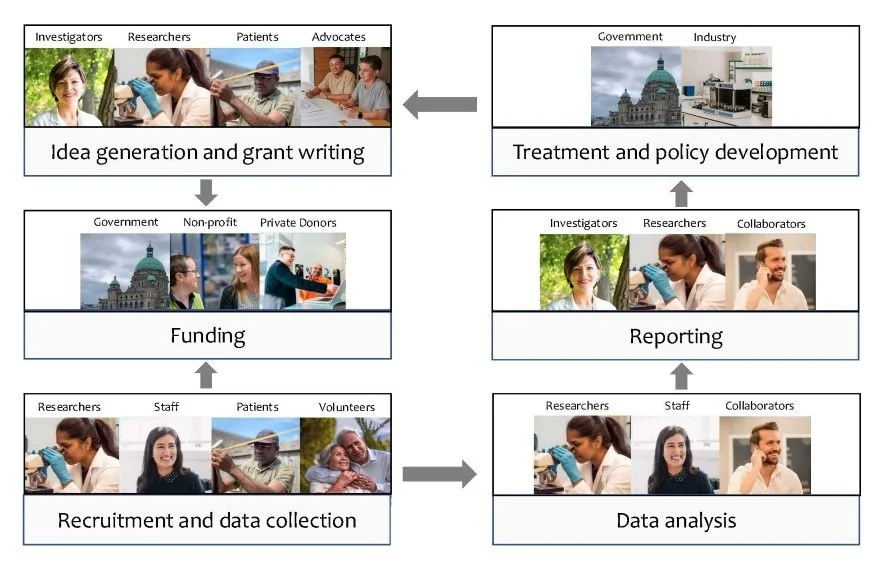
 The Research Lifecycle


Research is made possible through collaboration between patients, staff and volunteers, the community, as well as government, industry, and private donors. The "life cycle" of research can be broken down into the following stages:

  • Idea generation: Patients, advocates, investigators, and researchers come up with ideas for new research studies on disease prevention, intervention, and treatments, and write these ideas into grant proposals.

  • Funding: Grant proposals are submitted to funding competitions, through the government, non-profit organizations and private donors. For more information on the organizations supporting us, see the "Funding" page.

  • Recruitment and data collection: After funding is received and a study goes through ethics board approval, the magic begins! Eligible participants may enrol in a study to contribute to research on movement disorders. For more information on how to get involved in a study, see the "Our Studies" page.

  • Data analysis: Data generated from the study are analyzed, to answer the research questions proposed in the idea generation and funding phases.

  • Reporting: The data is peer-reviewed, published, and disseminated to the community through articles, talks, and presentations.

  • Treatment and policy development: Results of a research study can be used to develop new public healthy policies, lifestyle interventions, or therapies.

The PPRC also offers training opportunities for undergraduate and graduate students, as well as medical students, residents, and fellows who all make this research possible. Please see the "Training" page for more details.


Our Areas of Research


POSITRON EMISSION TOMOGRAPHY BRAIN IMAGING

PET is a brain imaging technique used to examine chemical function and cell behaviour in the brain. A PET scanner is similar to an MRI scanner in size and shape. In Canada, PET scanning has been approved by regulatory agencies as an investigative device, but is not used for routine diagnosis of disease. PET scanning measures the function of living cells experimentally.

This procedure involves the injection of a small amount of radiation attached to a medication. This combination of radiation and medication is called a "tracer". The location of the tracer in your brain will be detected using the PET scanner. A PET scan allows us to study specific brain chemicals, proteins and cells that provide vital information about disease onset, progression and complications.

The PPRC has a long history of applying PET to the study of Parkinson’s disease in partnership with TRIUMF, Canada's national accelerator facility and a world leader in this area.

PRINCIPaL INVESTIGATOR: DR. A. Jon STOESSL, Vesna Sossi
primary contact: jess mckenzie

JESS MCKENZIE________________clinicAL research nurse

JESS MCKENZIE
________________

clinicAL research
nurse

jess.mckenzie@ubc.ca
604-822-7764


MICROBIOME + GUT HEALTH

Our clinic’s microbiome studies aim to better understand the relationship between microbial populations in the body and the features of Parkinson’s disease, such as disease severity, age of onset, constipation, cognition, etc. This may be achieved through the collection and analysis of biological samples and clinical data from questionnaires of patients with Parkinson’s disease. Since 2018, we have been conducting longitudinal studies to examine how the relationship between the microbiome and features of Parkinson's disease and REM-Sleep Behaviour Disorder may change over time.

PRINCIPaL INVESTIGATOR: DR. SILKE APPEL-CRESSWELL
PRIMARY CONTACT: Dr. Samantha Schaffner

SAMANTHA SCHAFFNER

Samantha schaffner

————————————

Post-doctoral research fellow

samantha.schaffner@ubc.ca
604-822-3177


NOVEL TECHNOLOGIES + INNOVATIONS

Since the discovery of levodopa over 50 years ago little progress has been made for novel therapies in the treatment of Parkinson's disease. There have been numerous attempts to improve the treatment of Parkinson's disease through pharmaceutical and naturalistic approaches, but few have matched the effectiveness of levodopa. The PPRC is committed to researching novel therapies for Parkinson's disease to improve the quality and effectiveness of patient care. Specific areas of research include:

  • Smartphone applications

  • Eye movement

  • Motor symptoms

  • Sweat

  • Balance and gait

  • Sleep

  • Galvanic Vestibular Stimulation (GVS)

  • Transcranial Magnetic stimulation (TMS)

  • Direct Current Stimulation (DCS)

  • Electroencephalography (EEG) biofeedback

PRINCIPaL INVESTIGATOR: DR. MARTIN MCKEOWN
PRIMARY CONTACT: juana ayala Castaneda

Juana Ayala Castaneda________________Research Lab Manager

Juana Ayala CastanedA —————————————— Research Lab Manager

juana.ayala@ubc.ca
604-822-5293


CLINICAL TRIALS

Clinical trials are studies that involve investigational medicines in the hopes to modify an aspect of your condition. These medicines have been approved for use by Health Canada for research purposes to study and assess the effectiveness and safety of the intervention. Most of these studies are placebo-controlled, which means that there is the active medicine versus a “dummy pill”.

PRINCIPAL INVESTIGATOR: DR. Silke appel-Cresswell
PRIMARY CONTACT: Annie Kuan

annie kuan

——————-

research lab manager

annie.kuan@ubc.ca
604-827-0576


MAGNETIC RESONANCE IMAGING

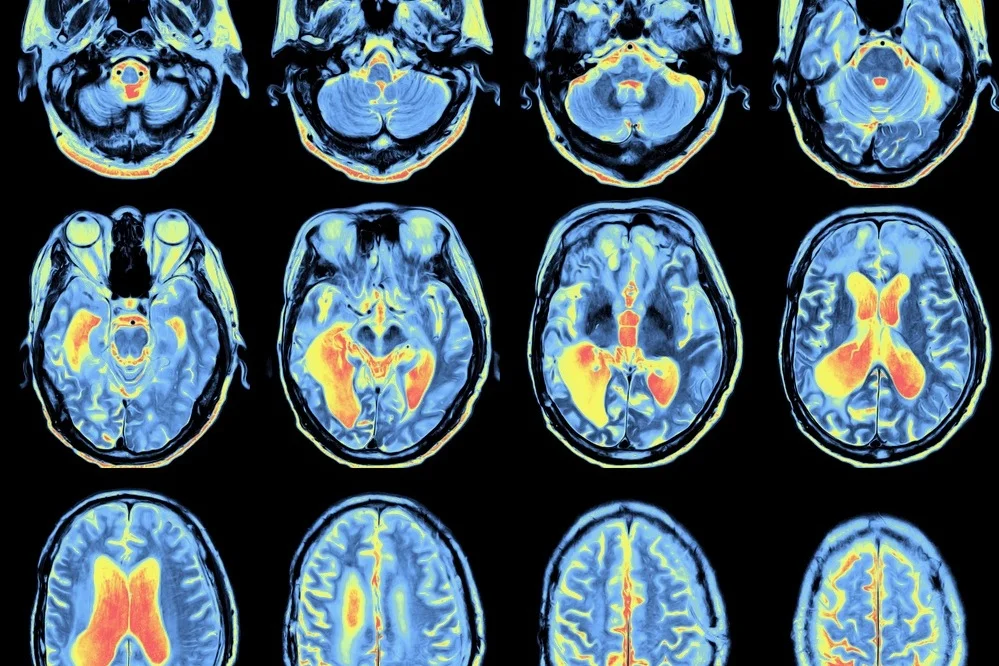
Functional magnetic resonance imaging (fMRI) is a non-invasive brain imaging technique commonly used by clinicians and neuroscientists to answer questions about the functions of the brain. fMRI can look at the structure and functioning of the brain without needing to inject a test substance or dye. The images obtained can be used to make inferences about brain activity when a task is carried out or when the brain is ‘at rest’. Oftentimes, a research participant is trained to carry out an experimental task (e.g., tapping their fingers, squeezing a ball while he/she is inside the MRI scanner). This is because the task is aimed at activating a set of brain regions or circuits that are revealed after elaborate image pre-processing steps to transform the brain scans into real images (also known as activation images).

Structural MRI takes pictures in a series of time to allow clinicians and researchers to non-invasively look at gross anatomical structures in the brain. They can spatially differentiate types of tissues at high resolution.


GENETICS

Genetic studies are part of an ongoing effort between the PPRC, the Djavad Mowafaghian Centre for Brain Health and the Centre for Applied Neurogenetics (CAN). The aim is to understand the mechanisms leading to Parkinson's disease and identify genetic factors that play an important role in the Parkinson's disease puzzle.

At the Centre for Applied Neurogenetics and the PPRC at the University of British Columbia, researchers are working with the latest technologies and with international collaborations in human genetics to find specific gene(s) responsible for Parkinson’s disease. Each discovery provides remarkable molecular insight. Discoveries in genetic research will advance our understanding of Parkinson’s, such as how the disease progresses, individual responses to medication and symptom patterns. We believe knowing the root of the problem will enable us to fix it.

Our approach hinges on the participation of affected and unaffected individuals, and especially families in which two or more persons have been diagnosed with Parkinson’s disease or another related neurological condition (dystonia, dementia, essential tremor, REM sleep disorder).